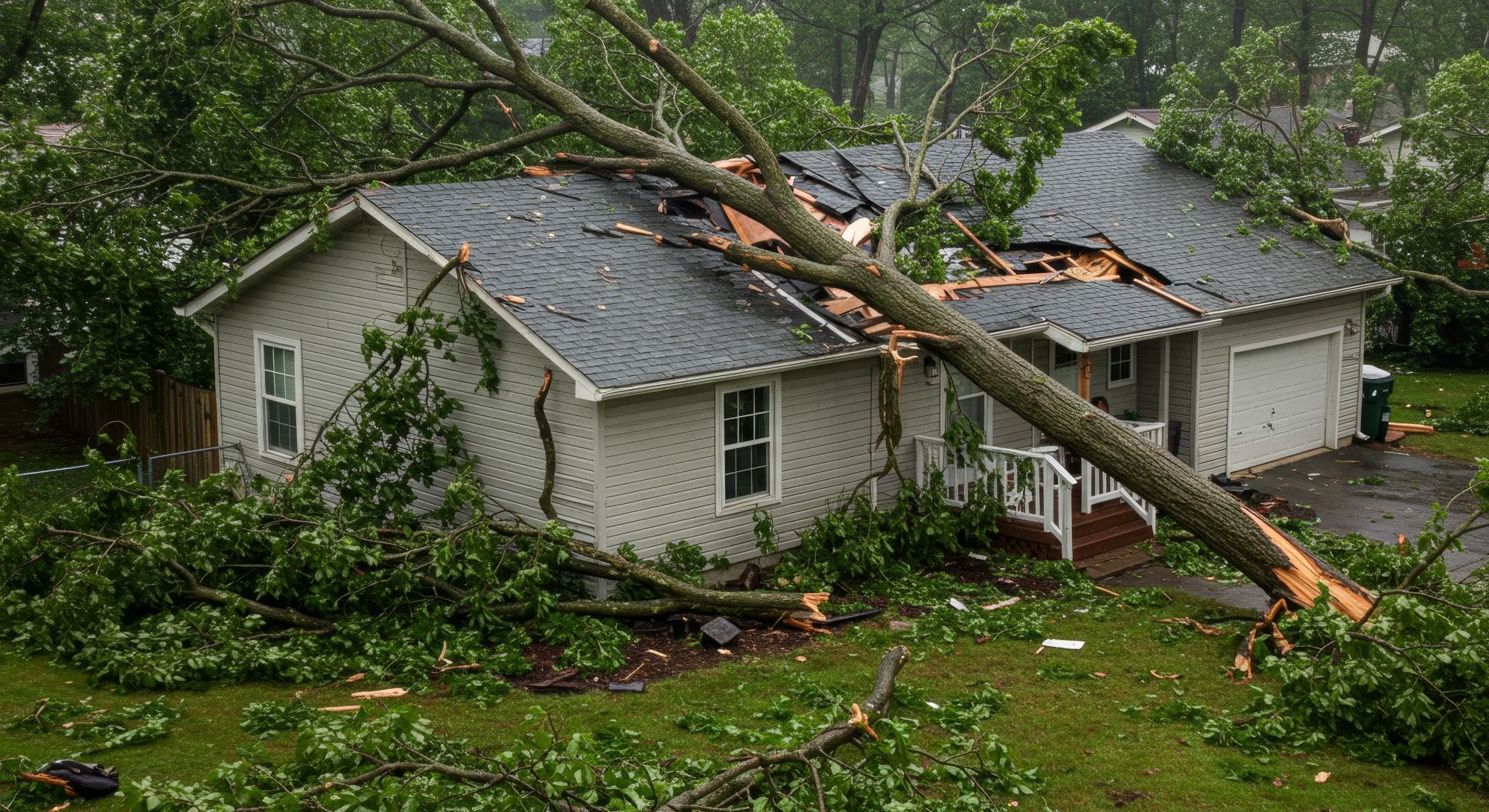
Managing a commercial property or an HOA along the Wasatch Front means dealing with many moving parts. Usually, the mature trees on your campus are considered a major asset—they provide shade, boost curb appeal, and increase property values. But the moment a tree becomes compromised, it ceases to be an asset and becomes an immediate financial and legal liability.
Utah’s high-desert climate is tough on landscaping. Between heavy, wet spring snow loads and fierce canyon winds, a weakened tree can fail without much warning.
How do you know if a tree needs to be removed from your commercial property?
In short, a tree should be removed if it shows signs of structural failure that threaten people or property. Key indicators include a sudden lean, large dead or hanging branches in the canopy, fungal growth on the trunk, root systems lifting concrete walkways, or dangerous proximity to power lines and building structures. If these signs are present, an immediate tree hazard assessment is required.
If you manage a property, you can’t afford to wait for gravity to decide for you. Here are five critical warning signs that it’s time to call a professional commercial tree removal service in the Salt Lake City area.
Many trees grow at a slight angle over time, reaching for the sun. That isn’t necessarily a problem. A sudden lean, however, is a major red flag.
If a tree suddenly shifts after a heavy storm or during the spring runoff when the soil is saturated, its root system has likely been compromised. The tree is actively fighting gravity, and the roots are losing the battle. If you notice a new lean, or if the soil on the opposite side of the lean is visibly cracking and heaving upward, the tree is in imminent danger of uprooting.
Take a walk around your property and look up into the canopies. Are there large, leafless branches during the spring or summer? More importantly, do you see broken branches just hanging loose, caught in the lower limbs?
In the landscaping industry, we call those hanging branches “widowmakers” for a reason. Deadwood is incredibly brittle. A single gust of wind can send a heavy branch crashing down onto a parked car, a tenant’s roof, or a community walkway. While routine pruning can handle minor deadwood, a tree that is consistently dying back from the crown is structurally failing and likely needs to come down entirely.
A tree can look surprisingly green and healthy on the outside while rotting from the inside out. You need to look closely at the trunk base and the joints of the main branches.
If you see mushrooms or large, shelf-like fungi (called conks) growing out of the bark, it’s a strong indicator of internal decay. The same goes for deep, hollow cavities or large, peeling vertical cracks in the trunk. Internal rot turns a heavy, towering tree into a hollow shell. These trees are prime candidates for snapping perfectly in half during the next big windstorm.
Not all liabilities fall from the sky. Sometimes, the biggest risk is right under your feet.
Aggressive root systems naturally seek out water and oxygen. Over time, they can wreak havoc on a commercial property’s infrastructure. If tree roots are buckling your sidewalks, lifting concrete landscape curbing, or invading your underground irrigation lines, the tree has outgrown its space. Lifted concrete isn’t just an eyesore; it’s an immediate ADA compliance violation and a severe trip-and-fall hazard. Attempting to chop the roots to fix the sidewalk will usually destabilize the tree, making removal and stump grinding the only permanent, safe solutions.
Trees planted decades ago by previous property managers may not have been an issue at the time. But as they reach full maturity, they often start encroaching on critical infrastructure.
If branches are resting directly on the roof of your commercial building, they will inevitably scrape away shingles and cause water leaks. If they are growing into utility lines, they become severe fire hazards and risk causing localized power outages. While utility companies will sometimes prune branches near their lines, they prioritize line safety, not the aesthetics or health of your tree, often leaving you with a butchered, unstable tree that needs to be removed anyway.
Hoping a compromised tree will survive another Utah winter is a terrible risk management strategy. Proactive removal is always exponentially cheaper than paying for structural repairs, insurance deductibles, and lawsuit settlements after a tree fails.
If you suspect a tree on your property is becoming dangerous, it’s time to bring in the experts for a proper tree hazard assessment in Utah.
At Denkers Property Maintenance, we’ve been helping Salt Lake City commercial properties and HOA boards navigate complex landscaping decisions since 1984. We partner with property managers to identify risks early, remove hazards safely, and ensure your landscape remains beautiful, functional, and liability-free.
Don’t wait for the next storm. Contact the Denkers team today to schedule an evaluation or call us directly at 801-484-8389.